Mr Sully Unfolds PhysicsAQA GCSE PHYSICS
AQA 4.7 · Paper 2

Magnetism and electromagnetism: AQA GCSE Physics revision

Magnetism and electromagnetism is topic 4.7 of AQA GCSE Physics (8463) and is assessed on Paper 2. This page has 17 key ideas grouped by specification section, the 2 equations you need, a revision checklist, common misconceptions and 36 key word definitions.

Mr Sully
Mr Sully says

Fields you can't see but can map with a compass. Higher tier: Fleming's left-hand rule is free marks once you've practised it.

Magnetism and electromagnetism key ideas

Everything the AQA specification expects you to know for this topic, grouped by spec section. Physics only isn't in Combined Science: Trilogy; Higher is Higher tier only.

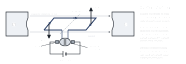
The d.c. electric motor (Higher): forces in opposite directions on the two sides of the coil make it rotate; the split-ring commutator reverses the current every half turn.

4.7.1 Poles of a magnet

  1. The poles of a magnet are where the magnetic forces are strongest. Two like poles repel; two unlike poles attract. These are non-contact forces.

4.7.1 Permanent and induced magnets

  1. A permanent magnet produces its own magnetic field. An induced magnet becomes a magnet only when placed in a magnetic field. Induced magnetism always causes attraction, and an induced magnet loses most or all of its magnetism quickly when removed from the field.

4.7.1 Magnetic fields

  1. A magnetic field is the region around a magnet where a force acts on another magnet or on a magnetic material (iron, steel, cobalt and nickel). The force between a magnet and a magnetic material is always attraction.
  2. The field is strongest at the poles and gets weaker with distance from the magnet. The direction of the field at any point is the direction of the force on a north pole there, so field lines go from the north (seeking) pole to the south (seeking) pole.
  3. A magnetic compass contains a small bar magnet. The Earth has a magnetic field; a compass points in the direction of it. This is evidence that the Earth's core must be magnetic. A compass can be used to plot the field of a magnet.

4.7.2 Electromagnetism

  1. When a current flows through a conducting wire, a magnetic field is produced around the wire. Its strength depends on the current and the distance from the wire.
  2. Shaping a wire into a solenoid increases the strength of the field. The field inside a solenoid is strong and uniform, and the field around it has a similar shape to a bar magnet. Adding an iron core increases the strength: a solenoid with an iron core is an electromagnet.
  3. Electromagnetic devices (e.g. electric bells, relays, door locks, cranes) use the fact that an electromagnet can be switched on and off. Interpret diagrams to explain how they work. Physics only

4.7.2 The motor effect

  1. When a conductor carrying a current is placed in a magnetic field, the magnet and the conductor exert a force on each other: the motor effect. Fleming's left-hand rule shows the relative directions of force, current and field. Higher
  2. For a conductor at right angles to a magnetic field: F = BIl (force = magnetic flux density × current × length). The force depends on the flux density, the current and the length of conductor in the field. Higher

4.7.2 Electric motors

  1. A coil of wire carrying a current in a magnetic field tends to rotate. This is the basis of an electric motor. Higher

4.7.2 Loudspeakers

  1. Loudspeakers and headphones use the motor effect to convert variations in current in electrical circuits to the pressure variations in sound waves. Physics only Higher

4.7.3 Induced potential

  1. If an electrical conductor moves relative to a magnetic field, or there is a change in the magnetic field around a conductor, a potential difference is induced across the ends of the conductor. If it is part of a complete circuit, a current is induced: the generator effect. Physics only Higher
  2. An induced current generates a magnetic field that opposes the original change. The size of the induced p.d. increases with the speed of movement, the strength of the field and the number of turns; reversing the movement or field reverses its direction. Physics only Higher

4.7.3 Uses of the generator effect

  1. Alternators generate a.c. and dynamos generate d.c. Moving-coil microphones use the generator effect to convert the pressure variations in sound waves into variations in current. Physics only Higher

4.7.3 Transformers

  1. A basic transformer has a primary coil and a secondary coil wound on an iron core. Iron is used because it is easily magnetised. An alternating current in the primary makes a changing magnetic field in the core, which induces an alternating p.d. in the secondary. Physics only Higher
  2. Vp/Vs = np/ns. Step-up: Vs > Vp. Step-down: Vs < Vp. If a transformer is 100% efficient, Vs × Is = Vp × Ip. Transmitting at high p.d. means a low current, which reduces power losses in the cables. Physics only Higher

Magnetism and electromagnetism equations

You get the Physics Equations Sheet in the exam, but you still need to choose the right equation, rearrange it and use the right units. See every GCSE Physics equation.

F = B I l
force = magnetic flux density × current × length
Units: N, T, A, m Higher
Vp ÷ Vs = np ÷ ns
transformer: p.d. ratio = turns ratio
Units: V, no units Higher Physics only

The big picture: how magnetism and electromagnetism fits together

1Poles and forces

The poles of a magnet are where its magnetic forces are strongest. Like poles repel; unlike poles attract. These are non-contact forces.

2Permanent and induced magnets

A permanent magnet produces its own magnetic field. An induced magnet only becomes a magnet when it's in a magnetic field. Induced magnetism always causes attraction, and the material loses most or all of its magnetism quickly once the field is removed.

3Magnetic fields

A magnetic field is the region around a magnet where another magnet or a magnetic material (iron, steel, cobalt, nickel) feels a force. The field is strongest at the poles and weaker further away. Field lines show the direction a north pole would be pushed, so they go from north to south, and they're closest together where the field is strongest.

4Compasses and the Earth's field

A compass needle is a small bar magnet that lines up with the magnetic field. You can plot a magnet's field by moving a compass around it and marking where the needle points. A compass points north even far from any magnet, which is evidence that the Earth's core is magnetic.

5The field around a wire

A current in a wire creates a magnetic field around it, in circles centred on the wire. The field is stronger with a bigger current and closer to the wire. Reversing the current reverses the field's direction.

6Solenoids and electromagnets

Coiling a wire into a solenoid makes the field stronger. Inside, the field is strong and uniform; outside, it looks like a bar magnet's. Adding an iron core makes it stronger still: that's an electromagnet. Its strength can be increased with more current or more turns, and it can be switched on and off.

7Electromagnetic devices Physics only

Electric bells, relays, door locks and scrapyard cranes all use electromagnets that can be switched on and off. To explain a device, follow the chain: switch closed → current flows → electromagnet becomes magnetic → it attracts an iron part → something moves.

8The motor effect Higher

A wire carrying a current in a magnetic field feels a force, because the two magnetic fields interact. Fleming's left-hand rule gives the direction: First finger = Field, seCond finger = Current, thuMb = Motion. If the wire is parallel to the field, there is no force.

9Calculating the force Higher

For a wire at right angles to the field, F = BIl. B is the magnetic flux density in tesla (T): the strength of the field. Increasing the current, the field strength or the length of wire in the field increases the force.

10Electric motors Higher

A coil carrying a current in a magnetic field tends to rotate, because the forces on its two sides act in opposite directions. A split-ring commutator reverses the current every half turn so the coil keeps spinning the same way. More current, a stronger field or more turns make it spin faster.

11Loudspeakers Physics only Higher

A loudspeaker has a coil in the field of a permanent magnet, attached to a cone. A changing (alternating) current in the coil makes a changing force (motor effect), so the cone vibrates and creates the pressure variations of a sound wave.

12The generator effect Physics only Higher

Move a wire relative to a magnetic field, or change the field around a wire, and a potential difference is induced across it. In a complete circuit, this drives an induced current. The induced current makes its own magnetic field that opposes the change that caused it. A bigger speed, stronger field or more turns gives a bigger p.d.

13Alternators, dynamos and microphones Physics only Higher

An alternator is a generator that produces a.c.; a dynamo produces d.c. On a p.d.–time graph, a faster rotation gives a higher peak and more cycles per second. A moving-coil microphone is a loudspeaker in reverse: sound waves move a coil in a magnetic field, inducing a changing current.

14Transformers Physics only Higher

A transformer has a primary and a secondary coil wound on an iron core (iron is easily magnetised). An alternating current in the primary creates a changing magnetic field in the core, which induces an alternating p.d. in the secondary. It only works with a.c. Step-up transformers have more turns on the secondary; step-down transformers have fewer.

15Transformer calculations Physics only Higher

Vp/Vs = np/ns links p.d. and turns. If a transformer is 100% efficient, the power in equals the power out: Vp × Ip = Vs × Is. So stepping the p.d. up steps the current down, which is why transmitting at a high potential difference reduces power losses in the National Grid.

Magnetism and electromagnetism revision checklist

Can you do all of these? Rate yourself red, amber or green in the interactive checklist and your progress is saved in your browser.

  • Describe magnetic poles and draw field-line diagrams
  • Tell permanent and induced magnets apart
  • Describe how to plot a magnetic field with a compass
  • Describe the field around a wire and a solenoid
  • Explain how electromagnets work and how to make them stronger
  • Use F = BIl and Fleming's left-hand rule (Higher)
  • Explain how an electric motor works (Higher)
  • Loudspeakers and microphones (Physics only, Higher)
  • The generator effect, alternators and dynamos (Physics only, Higher)
  • Transformers (Physics only, Higher)

Common magnetism and electromagnetism misconceptions

Mistakes that lose marks every year. Read the myth, then the fix.

Is it true that all metals are magnetic?

MythAll metals are magnetic.
ActuallyOnly iron, steel, nickel and cobalt are magnetic.

Is it true that the Earth's geographic North Pole is a magnetic north pole?

MythThe Earth's geographic North Pole is a magnetic north pole.
ActuallyThe north end of a compass is attracted there, so it's actually a magnetic south pole.

Is it true that transformers work with d.c?

MythTransformers work with d.c.
ActuallyThey need a changing magnetic field, so they only work with a.c.

Magnetism and electromagnetism key words and definitions

Learn these in the wording AQA uses. Test yourself with the flashcards.

Magnetic field
The region around a magnet where a force acts on another magnet or magnetic material.
Permanent magnet
Produces its own magnetic field.
Induced magnet
Becomes a magnet only when it is in a magnetic field.
Magnetic materials
Iron, steel, cobalt and nickel.
Solenoid
A coil of wire. The field inside is strong and uniform.
Electromagnet
A solenoid with an iron core. It can be switched on and off.
Motor effect
The force on a current-carrying wire in a magnetic field (Higher).
Fleming's left-hand rule
First finger: field. Second finger: current. Thumb: motion (force) (Higher).
Magnetic flux density
The strength of a magnetic field. Measured in tesla (T) (Higher).
Generator effect
A p.d. is induced when a wire moves relative to a magnetic field (Physics only, Higher).
Magnetic poles
The ends of a magnet, where the field is strongest.
Like poles
Repel.
Unlike poles
Attract.
Direction of field lines
From north pole to south pole.
Compass
A small bar magnet that points along the field lines.
Evidence Earth's core is magnetic
A compass points north when away from other magnets.
Field around a wire
Circles around the wire. Stronger closer to the wire and with more current.
Uniform field
Field lines that are parallel and equally spaced, e.g. inside a solenoid.
Split-ring commutator
Reverses the current in a motor coil every half turn (Higher).
Alternator
A generator that produces a.c. (Physics only, Higher).
Dynamo
A generator that produces d.c. (Physics only, Higher).
Unit of magnetic flux density
The tesla (T).
Equation: force
F = B I l (units: N, T, A, m) · Higher
Equation: the transformer turns ratio
Vp ÷ Vs = np ÷ ns (units: V, no units) · Higher · Physics only
Earth's magnetic field
Makes a compass point north; evidence the core is magnetic.
Strength of a field
Shown by how close together the field lines are.
Electromagnet uses
Electric bells, relays, door locks and scrapyard cranes.
Equation: force on a wire
F = BIl (Higher)
When is F = BIl zero?
When the wire is parallel to the magnetic field (Higher).
Electric motor
A coil carrying current in a magnetic field rotates (motor effect) (Higher).
Loudspeaker
An alternating current in a coil in a magnetic field makes the cone vibrate (Physics only, Higher).
Moving-coil microphone
Sound makes a coil vibrate in a magnetic field, inducing a p.d. (Physics only, Higher).
Factors increasing induced p.d.
Faster movement, stronger magnet, more turns on the coil (Physics only, Higher).
Transformer structure
A primary and secondary coil wound on an iron core (Physics only, Higher).
Transformer equation
Vp ÷ Vs = np ÷ ns (Physics only, Higher)
Transformer power
Vs × Is = Vp × Ip for 100% efficiency (Physics only, Higher)

Magnetism and electromagnetism in the real world

Unfamiliar context? Don't panic. Exam questions often wrap physics you know in a situation you've never seen. 1) Strip away the story. 2) Find the physics words: force, energy, current, wave… 3) Pick the idea or equation that fits. 4) Link your answer back to the context.

Scrapyard cranes

Scrapyards lift old cars with a huge electromagnet on a crane.

The physics: An electromagnet's field can be switched on to pick up steel and switched off to drop it. Its strength can be increased with more current or more turns.

Try this

Give two advantages of using an electromagnet rather than a permanent magnet on a scrapyard crane.

Show answer

It can be switched off to release the load, and its strength can be adjusted by changing the current.

MRI scanners

MRI scanners in hospitals use a very strong magnetic field from a large coil. Patients must remove anything metal before going in.

The physics: A big current in a large solenoid makes a very strong, uniform field. Magnetic materials such as steel become induced magnets and are pulled strongly into the field.

Try this

Explain why patients must remove steel objects before an MRI scan.

Show answer

Steel is a magnetic material, so it becomes an induced magnet in the strong field and is strongly attracted. It could move with great force and injure the patient or damage the scanner.

Wireless phone charging (Physics only, Higher)

Some phones charge just by resting on a pad, with no cable plugged in.

The physics: An alternating current in a coil in the pad makes a changing magnetic field. This changing field passes through a coil in the phone and induces a p.d. that charges the battery, just like a transformer.

Try this

Explain why the charging pad must use alternating current.

Show answer

A p.d. is only induced in the phone's coil if the magnetic field is changing. Alternating current makes a constantly changing field; direct current would make a steady field and induce nothing.

Electric guitar pickups (Physics only, Higher)

An electric guitar has small coils with magnets under the steel strings.

The physics: The steel string becomes an induced magnet. When it vibrates, the magnetic field through the coil changes, inducing a small alternating p.d. that is amplified.

Try this

Explain how a vibrating steel string produces an electrical signal in the pickup coil.

Show answer

The string is magnetised by the pickup's magnet. When it vibrates, it changes the magnetic field through the coil, which induces a p.d. in the coil. The p.d. changes at the same frequency as the string vibrates.

Printable magnetism and electromagnetism resources

More: all worksheets · all knowledge organisers · revision booklets · practice mock papers

Magnetism and electromagnetism animations

The motor effect (Higher)

Use Fleming's left-hand rule to predict which way the wire will move, then reverse the current or swap the poles to check.

Magnetic fields and compasses

Move the compass around the magnet. It always lines up with the field lines, pointing from N to S.

Test yourself on magnetism and electromagnetism

Reading isn't revising. Open the interactive Magnetism and electromagnetism topic to quiz yourself, flip the flashcards, blurt everything you remember against the clock and try the Grade 5+ and Grade 7+ questions.